
A Solution for Freeland
Updated: Jul 15

Port Hadlock treatment plant under construction.
This is the fourth in a series of posts on the importance of limiting Island County growth to our designated Urban Growth Areas, especially Freeland, by Dean Enell, current climate activist with Whidbey Climate ACTION. See Freeland, where art thou? 9/17/25, Keep Rural Areas Rural 4/12/25, and Sewer Fights Climate Change 3/21/25.
A sewer might be boring and neglected but sprawl is ugly and forever.
Why would a climate activist and Whidbey preservationist be concerned about a sewer in Freeland, of all places?
From a legal and smart growth perspective, I would refer you to this previous blog post.
From a climate lens, 30% of US greenhouse gas emissions come from the transportation sector. It makes sense that we try to foster conditions that are favorable to public transportation and continue to counter an unattractive and persistent sprawl across our rural environment.
We created something called an Urban Growth Area (UGA) in Freeland around three decades ago with every intention to make it a recipient of a large portion of new Island County population growth. Well, we never got that infrastructure thing off the ground, the biggest piece of which is waste water treatment, and as a result 85% of new growth settles in the rural areas of South Whidbey. This was certainly not the plan when we embarked upon State-mandated growth management with a Comprehensive Plan adopted back in 1998.
Freeland Water and Sewer made a couple runs at a sewer that struck out for various reasons, ending up with what might be called a severe lack of enthusiasm for such an undertaking. This writer has been encouraging the county to accept that responsibility and take on the sewer project. It's a big undertaking and requires grant money, but it is doable. This was demonstrated to us last September when our neighboring Jefferson County completed a modular sewer system in one of their UGAs, Port Hadlock, which has a history and characteristics almost identical to Freeland (rural setting, 3,900 residents vs 2,300 in Freeland). The project won numerous State awards, including WA Counties' Impact Award, and accolades for all those involved.
The Port Hadlock sewer project took a while to coalesce, with COVID intervening and grant opportunities having to align. (See their presentation below.) But once set, construction took only four years. Here is a project overview:
Treatment via a membrane bioreactor (MBR), same as Port Gamble.
Produces Class A reclaimed water (and biosolids byproduct).
24,000 gallons per day (startup), with 72,000 gpd capacity (expandable).
Modular design for a lower initial cost and efficient expansion as population needs grow.
60 properties hooked up in the initial served area, the town core: a primary school, library, grocery store, laundromat, apartment complexes, and numerous small businesses.
Constructed in four phases: (1) site prep, (2) treatment plant construction, (3) low-pressure collection system buildout, and (4) property hookups.
Total cost was $35.6M, almost entirely from grants: County ($3.4M), Dept. of Commerce ($20M), Dept. of Ecology ($6.7M), and the federal EPA ($5.5M).
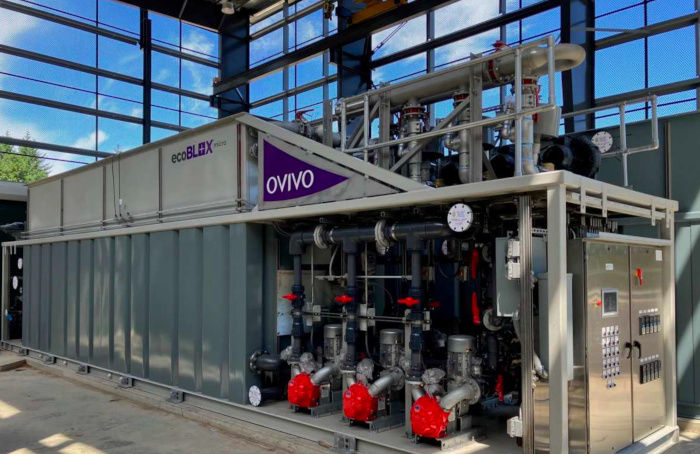
Port Hadlock treatment plant's membrane bioreactor installed.
In addition to reducing sprawl to meet GMA goals, the sewer has provided the community with substantial other benefits as well:
Ecological/Health: Numerous failing septic systems were replaced.
New Businesses: By serving the central part of town, the sewer has enabled new businesses and increased the convenience and attraction of the area. For example, a grocery store can now safely operate.
Affordable Housing: Habitat for Humanity's Mason Street project has plans to build 138 permanently affordable homes made possible with the sewer hookups. Only three houses could be placed on the property pre-sewer.
Water Reclamation: All of the treated water, currently 24,000 gallons / day, is returned as Class A water to the aquifer.
Less Infrastructure: The low-pressure collection drain lines are small, can be placed near the surface, and can easily go around bends and up hills. This means much lower cost to install and to extend the lines.
It’s always been a struggle to create a GMA-mandated plan around here that preserves our cherished rural character as we continue to gobble up those open areas which make this place so special. That Freeland sewer has finally found it’s way onto the County's project docket with a priority of ‘high’ for next year. Let’s hope we can satisfy that simple GMA mandate by putting population growth in areas where the County has provided the adequate infrastructure, as dictated by State law. The County talks of creating a UGA in Clinton in coming years but, again, what’s the point if it’s not made into a functional entity with affordable housing and related amenities?
Thank you Monte Reinders (former Public Works Director) and the whole Jefferson County team for sharing the project details and your valuable experience. Island County officials would benefit greatly from the ‘Lessons, Advice, Words of Wisdom' (page 27) of the presentation.
Port Hadlock sewer project presentation.
Create affordable housing, protect rural areas and habitat.
Put a sewer in Freeland!

